
Kochi’s New Shipping Connections to UAE, Oman & Yemen
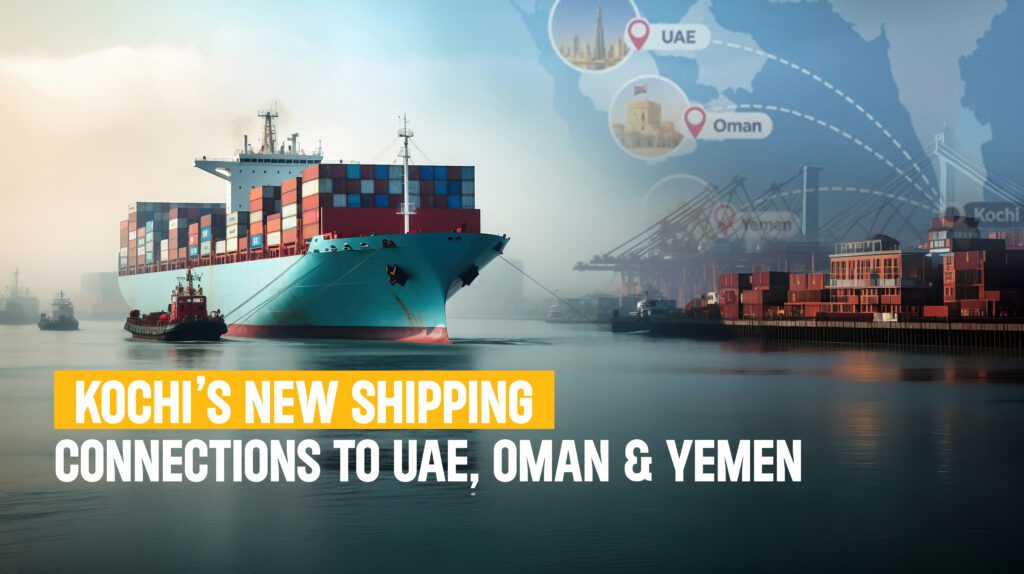
Kochi is strengthening its position as an important centre for international shipping and logistics. The introduction of a new container shipping service connecting Kochi with UAE, Oman and Yemen highlights the growing importance of the region in global trade.
The new service connects Kochi’s Vallarpadam International Container Transshipment Terminal (ICTT) with ports including Fujairah in the UAE, Sohar in Oman and Aden in Yemen. The service is expected to provide another transportation option for businesses involved in international cargo movement.
The shipping route follows:
Kochi → Nhava Sheva → Fujairah → Sohar → Aden → Kochi
The service operates on a fortnightly basis, with vessels such as M.V. Marsa Virgo and M.V. Marsa Zenith serving the route. Each vessel has a capacity of more than 500 TEUs, providing additional capacity for containerised cargo movement.
What Does a Logistics Professional Actually Do?
Many people think logistics is simply about transporting goods from one location to another. In reality, logistics involves much more.
A logistics professional may be responsible for coordinating:
• Cargo movement
• Shipping documentation
• Freight forwarding
• Customs procedures
• Port operations
• Transportation
• Warehousing
• Inventory management
• Container movement
• Import and export activities
• Supply-chain coordination
Every shipment requires multiple people and organisations to work together. A logistics professional helps ensure that these activities are properly coordinated.
How Can a Logistics Student Contribute to International Shipping?
A logistics student who receives practical industry-oriented training can develop skills that are relevant to different stages of the shipping process.
1. Understanding Cargo Movement
A logistics student learns how goods move through different stages of the supply chain.
For example, cargo leaving Kochi for an international destination may involve:
Exporter → Transporter → Port → Container Terminal → Shipping Line → International Port → Importer
Understanding this complete movement helps logistics professionals identify where coordination is required.
2. Shipping Documentation
International shipping involves significant documentation.
Logistics professionals may work with documents related to:
• Bills of Lading
• Commercial invoices
• Packing lists
• Shipping instructions
• Import and export documentation
• Customs-related documents
• Cargo and container information
A trained logistics professional helps ensure that the required information is properly prepared, checked and communicated between the relevant parties.
Even a small documentation error can create delays in cargo movement. Therefore, attention to detail is an important skill for logistics students.
3. Freight Forwarding and Shipment Coordination
Freight forwarders act as important links between exporters, importers, shipping lines, transporters and other logistics service providers.
A logistics student can learn how shipments are planned and coordinated, including selecting appropriate transportation methods, communicating with different stakeholders and tracking cargo movement.
When shipping routes expand, the ability to coordinate international shipments becomes even more important.
4. Port and Container Operations
Ports are critical points in the supply chain.
Logistics students can develop an understanding of how containers are received, handled, stored, loaded and transferred between different modes of transportation.
Knowledge of port operations can help students understand what happens behind the scenes when a container moves from an exporter to an international destination.
5. Customs and Import-Export Procedures
International cargo must comply with customs and trade requirements.
Logistics professionals often work with customs brokers, freight forwarders, shipping companies and importers/exporters to ensure that shipments follow the required procedures.
Students who understand the basics of import-export procedures can become better prepared for careers in international logistics.
Why Vallarpadam is becoming more important
The terminal has:
2.5 million TEUs stated annual capacity
950-metre quay
17.6-metre depth alongside
Ability to accommodate vessels up to 400 metres LOA
Road and rail connectivity to southern and other parts of India
This indicates that Kochi is strengthening its position as an important container logistics and maritime trade hub. As shipping networks expand, the logistics industry needs trained professionals who can coordinate different activities involved in moving cargo efficiently.
This is where logistics professionals come in.
Logistics Is About Coordination
One of the biggest lessons from the growth of international shipping is that logistics is a coordination-based industry.
Imagine a container shipment leaving Kochi for the Middle East.
Several activities may need to happen at the right time:
Cargo preparation → Documentation → Transportation to port → Customs procedures → Container handling → Vessel loading → International transportation → Destination port handling → Final delivery
A delay in one stage can affect the entire shipment.
This is why logistics professionals need more than theoretical knowledge. They need communication, coordination, problem-solving and planning skills.
Career Opportunities in the New Shipping Services
A single container shipment involves many professionals, including:
• Shipping & Logistics Executives
• Freight Forwarding Executives
• Import & Export Documentation Executives
• Port & Terminal Operations Staff
• Cargo & Container Coordinators
• Supply Chain Executives
• Warehouse & Transport Coordinators
Career opportunities can exist across shipping companies, freight-forwarding companies, logistics service providers, warehouses, ports, exporters, importers and supply-chain organisations.
Why Choose a Logistics Course in Kochi?
For students in Kerala, studying logistics in Kochi can provide an important advantage because the city has a strong connection with the maritime and shipping industry.
With developments such as new shipping services and increasing container activity, students can observe how logistics operates around them.
A good logistics course should therefore focus not only on textbook concepts but also on practical knowledge of:
Shipping + Freight Forwarding + Import & Export + Warehouse Management + Supply Chain + Documentation + Port Operations
This combination can help students understand the complete logistics ecosystem.
From Classroom Learning to Real-World Logistics
The new Kochi–UAE–Oman–Yemen shipping connection is one example of how the logistics industry continues to evolve.
For a logistics student, the important question is not simply:
Where are the ships going?
The bigger question is:
“Who is making sure everything reaches the right place, at the right time, with the right documentation and coordination?”
The answer includes thousands of logistics professionals working behind the scenes.
Every container shipment represents a chain of people, processes, technology and transportation systems working together.
By developing the right skills, today’s logistics students can become part of that supply chain tomorrow.
The world moves through logistics. Learn how it moves, and build your career around it.